

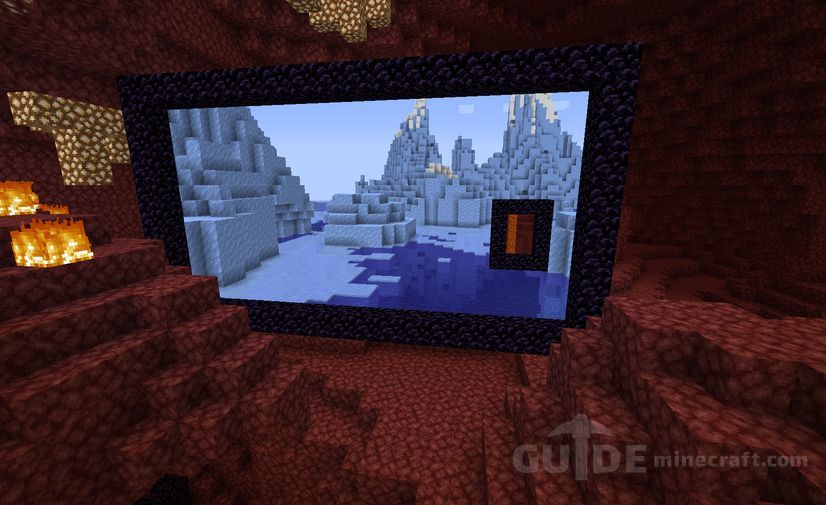
A vanilla Nether portal is a purple wall and a loading screen. With Immersive Portals by qouteall, the portal becomes a window: you see the Nether through the frame from the Overworld, and walking through it takes you straight to the other side with no loading screen in between. The mod is a Java Edition mod for Fabric. This page has builds from 1.14.4 up to 1.21.1. The mod is by qouteall and released under the Apache 2.0 license.

What changes in your world
The first surprise for many players: portals you built before installing the mod stay vanilla. Only portals you light afterwards become see-through, and they will not link to an old vanilla portal. On the far side they link only to an empty obsidian frame of the same shape and orientation, unless the server switches the Nether portal mode to adaptive.
New portals are also less strict about shape. They can be non-rectangular or lie flat on the ground, with a maximum side length of 20 blocks. Other features:
- End portal: in the default mode it drops you at a fixed point in the End with six seconds of slow falling, unless you wear an elytra. A scaledView mode shows the whole End island in miniature but runs heavier.
- Mirrors: right-click a rectangular glass wall with flint and steel. Breaking the glass removes the mirror.
- Commands: the /portal command family can create custom portals, stack dimensions on top of each other, or wrap a world so walking off one edge brings you back on the other.

Sodium, Iris and other mods
Rendering a second world through a frame means patching the renderer, and that is where conflicts come from. The wiki says that since 1.19 each Immersive Portals release works with exactly one version of Sodium and one version of Iris. Fabric shows an error at startup when the pairing is wrong, which at least tells you what to swap. For the 1.21.1 release 6.0.6 the targets are Sodium 0.6.0 and Iris 1.8.0, and the author marks that build as experimental.
OptiFine is incompatible. If portals show up through walls while you run Iris shaders, turn on Compatibility Render Mode: it avoids the stencil buffer, but you lose portals inside portals. The author also advises against loading it through Sinytra Connector.
Performance and settings
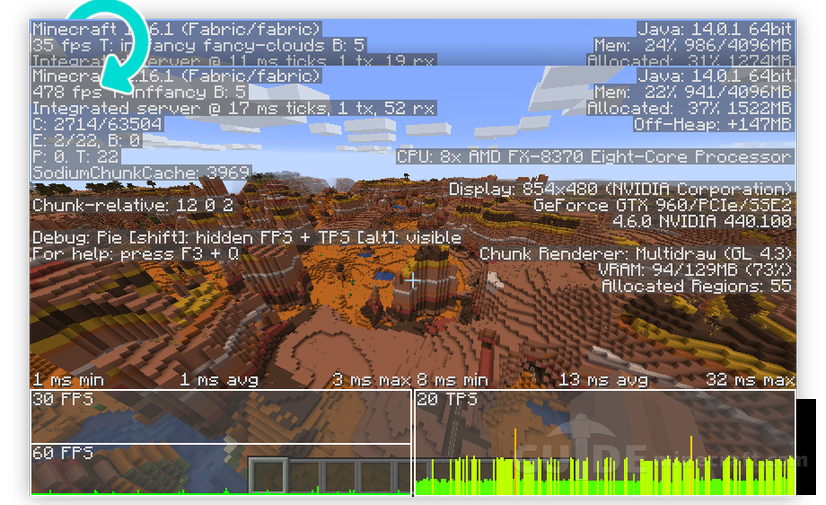
Seeing into the Nether means the game loads and draws chunks there too, so expect more memory use and lower frame rates near portals. The mod cuts its own cross-portal loading when FPS or free memory drops, and caps that radius at 8 chunks by default. Giving Minecraft more RAM helps; our FPS guide covers the rest.
Open the settings with /imm_ptl_client_debug config or through a mod menu mod. Max Portal Layer set to 1 stops portal-in-portal rendering, and Portal Render Limit caps how many portals are drawn per frame. Both help on weaker PCs. The file itself is config/immersive_portals.json.
Installing, multiplayer and Bedrock
- Install Fabric Loader and Fabric API, which recent builds list as required.
- Put the Immersive Portals jar for your exact version into the mods folder.
- Light a fresh Nether portal and look through it.
On a server, both server and every client need the mod. It is not a plugin, so Paper and Spigot servers cannot run it. A separate port for Forge and NeoForge exists, maintained by Nick1st together with qouteall, but the files on this page are Fabric only. As of October 2026, no official build newer than 1.21.1 has been released; 1.20.1 got an update in late 2025.
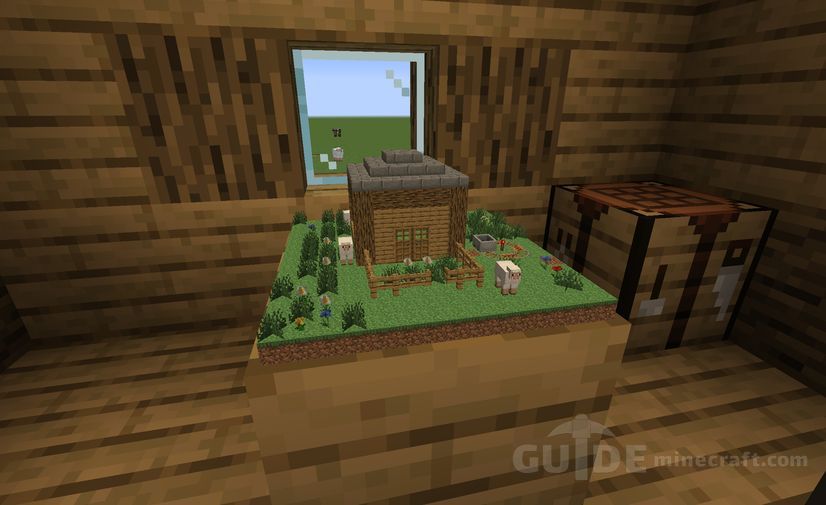
Many searches ask for Immersive Portals on Bedrock or Minecraft PE. There is no such version: the mod is a Java jar and cannot load on Bedrock, phones or consoles. If you like mods that bend space, Chunk In A Globe puts a walk-in room inside a single block.
Ivan Posochov