
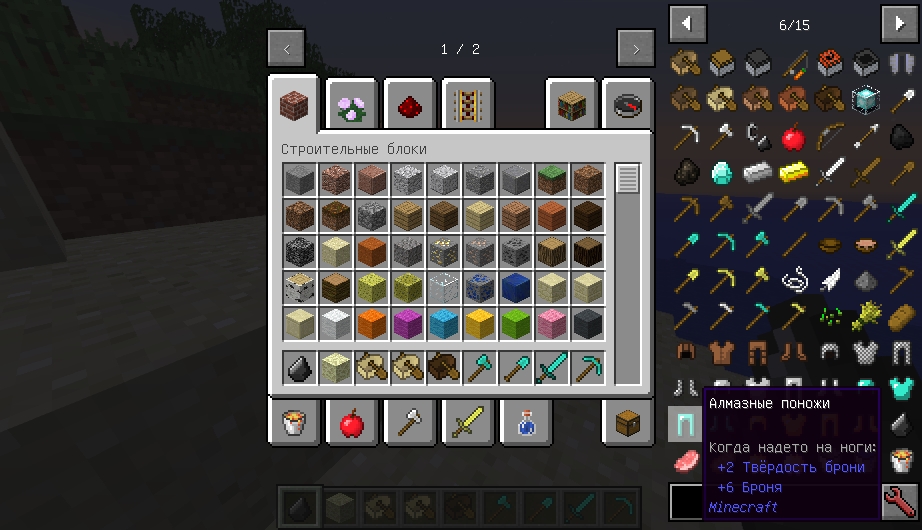
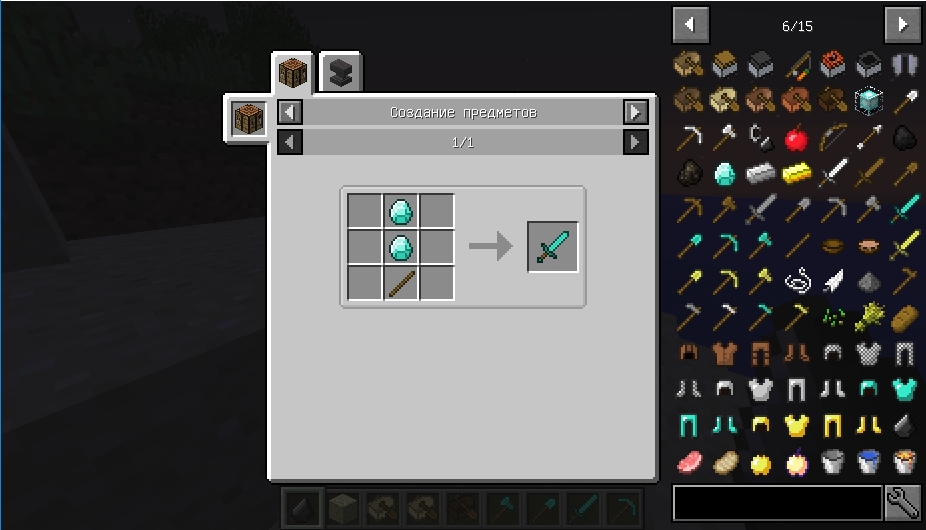
Ask on any Fabric forum how to look up recipes and the old answer is REI. For years that was the only option, because Just Enough Items was a Forge mod. That changed with JEI 10 for Minecraft 1.18.2, when mezz started publishing official Fabric builds from the same codebase as the Forge ones. This page has those Fabric files, from 1.18.x up to 1.21.1.
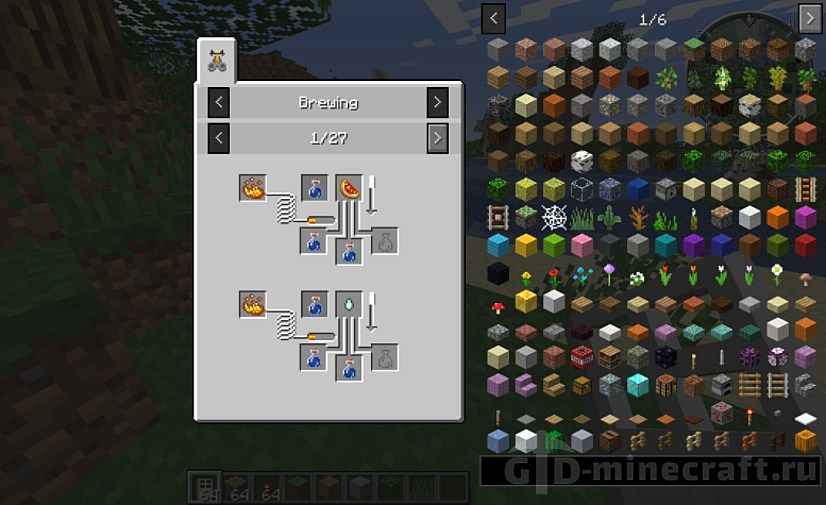
The features match the original: a searchable item list beside every inventory, R for recipes, U for uses, A for bookmarks and Ctrl+O to hide the list. The controls, cheat mode and search syntax are covered in detail on the main JEI page for Forge and NeoForge. Here we focus on what is specific to Fabric.

Which Minecraft versions have a Fabric JEI
The Fabric line is not continuous, and that explains most “JEI won’t load” complaints:
- 1.18.2 to 1.21.1: official Fabric builds exist for each major version, and those are the files offered here. The entry labelled 1.18.x is built for 1.18.2; Fabric JEI never existed for 1.18 or 1.18.1, so update the game to 1.18.2 if you are still on those.
- 1.21.2 to 1.21.9: no Fabric releases at all; mezz’s builds for this stretch target NeoForge. There is no official Fabric JEI for 1.21.4, 1.21.5 or 1.21.8, whatever a random jar name claims.
- 1.21.10 onward: Fabric builds came back and continue alongside NeoForge.
So if you play Fabric 1.21.4 to 1.21.8, use Roughly Enough Items, which kept updating through that stretch.
JEI or REI on Fabric?
Both do the same job, and both are free and actively maintained. The differences are practical:
- Dependencies. JEI needs only Fabric API on these builds. REI also pulls in Architectury API and Cloth Config.
- Search symbols are swapped. In JEI, # searches tags and $ searches tooltips. REI does the opposite: # for tooltips, $ for tags. Muscle memory from one will mislead you in the other. REI adds regex search with r/…/.
- Mod integrations. Each viewer only shows custom machine recipes from mods that ship a plugin for it. Check what your biggest tech or magic mod supports before choosing.
- Look and layout. REI is more configurable visually; JEI keeps a fixed, compact layout.
Pick one. Installing both gives you two item lists fighting for the same screen space and overlapping hotkeys. Changing your mind later is cheap: neither viewer adds blocks or items to the world, so you can swap one jar for the other between sessions and your save opens as before.
Requirements and install
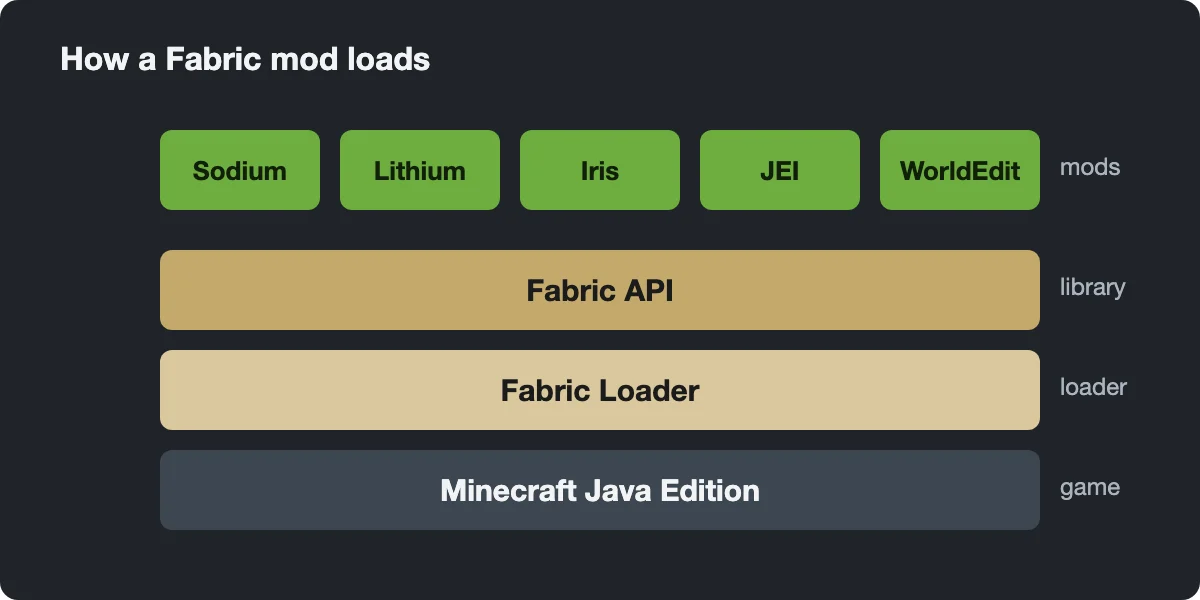
- Install Fabric Loader for the game version you want and run that profile once so the folders exist.
- Put Fabric API in the mods folder. JEI’s Fabric metadata lists it as required, and the game will refuse to start without it.
- Add the JEI jar whose name matches your Minecraft version exactly, for example jei-1.20.1-fabric for 1.20.1.
- Launch and open your inventory. The item list should appear on the right.
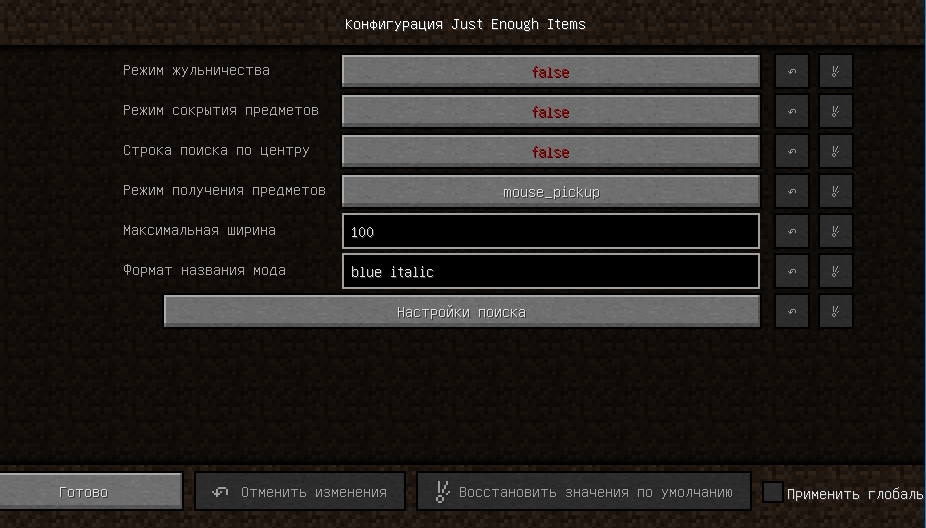
Mod Menu is optional. It gives Fabric a Mods screen where JEI shows up in the list; JEI’s own settings are reached in game through the wrench button next to its search bar. Builds newer than the ones here (from September 2026) also require mezz’s MezzConfig library, so read the requirements if you update JEI separately.

Questions Fabric players ask
Does JEI for Fabric work on a server?
On 1.21.1 and older you can run it on your client only. The recipe transfer [+] button and item deletion stop working on servers without JEI, but browsing recipes is fine. From 1.21.2, recipes live on the server, so JEI must be installed there as well.
Which mod shows what I am looking at?
JEI covers recipes, not blocks in the world. For a tooltip naming the block or mob under your crosshair, add Jade or WTHIT. Neither conflicts with JEI.
