
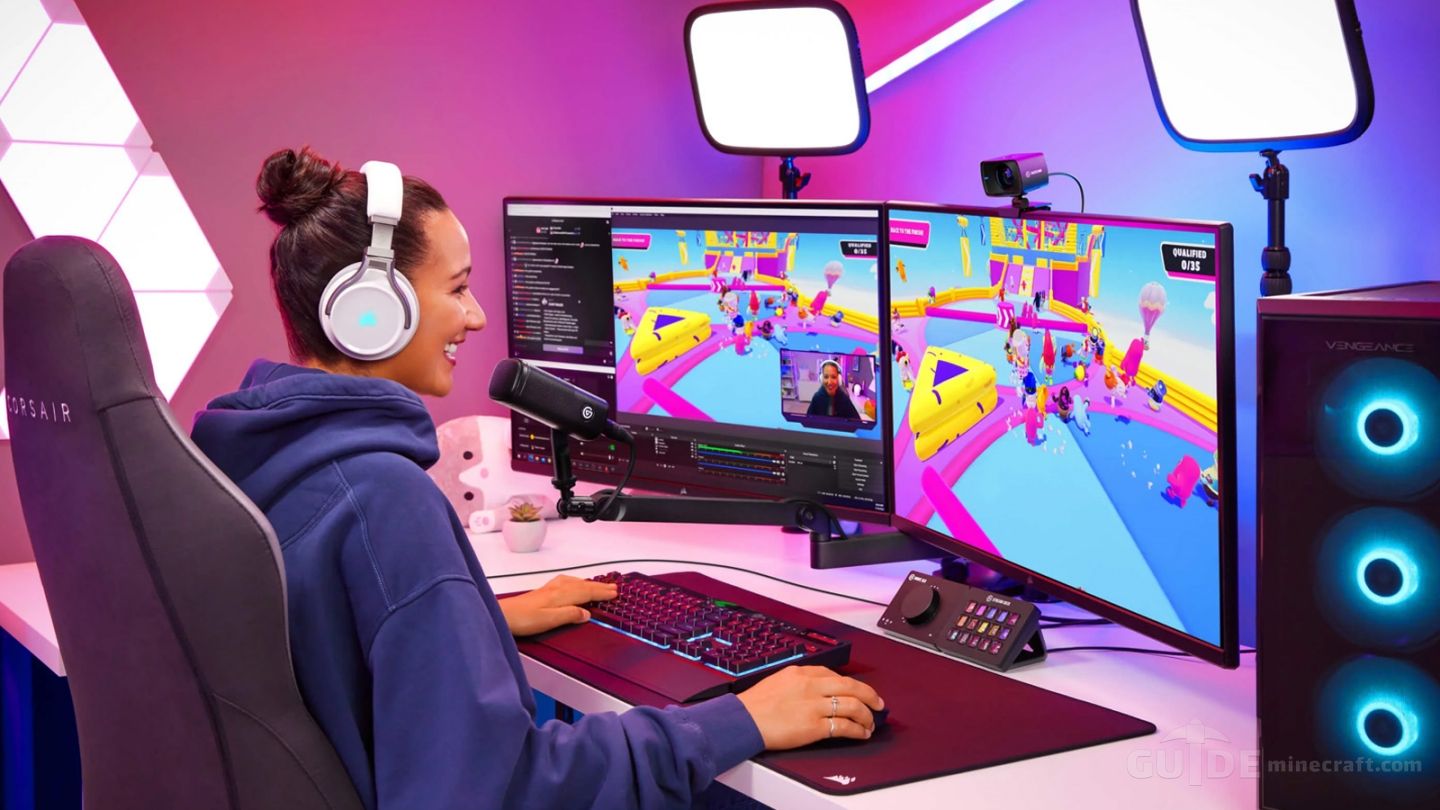
For creators trying to grow on Twitch, Kick, YouTube, and other live-streaming platforms, boosting viewers has become a topic that attracts considerable attention. The idea is straightforward: a creator pays for a service designed to increase the number of people associated with a live broadcast, potentially making a stream appear more active and helping it attract additional attention. However, not every viewer-boosting service works in the same way, and the difference between legitimate promotion and artificial engagement is important. Understanding what these services actually provide, what results can realistically be expected, and what risks may exist is essential before spending money.
Streaming has become highly competitive. Thousands of channels can be live simultaneously, and a new or relatively small creator may find it difficult to get noticed even when producing good content. A stream with only a handful of viewers can easily be overlooked, while a broadcast that already has visible activity may attract curiosity from people browsing categories. This is one reason viewer-related promotion services have appeared around the streaming industry.
The subject is more complicated than simply purchasing a number and watching it increase. Viewer counts can come from different sources, and the quality of those viewers matters enormously. Some services concentrate on promotional exposure, while others sell automated or otherwise artificial traffic. There can also be major differences in retention, interaction, geographic targeting, delivery speed, and platform compatibility. This guide examines those differences and explains what streamers should consider before using any viewer-boosting service.
What Are Stream Viewer Boosting Services?
Stream viewer boosting services are online platforms that offer creators ways to increase the apparent or actual audience of a live broadcast. Depending on the provider, the service may involve advertising, promotional distribution, audience acquisition, or artificial traffic. The exact mechanism can vary considerably.
The basic concept is easy to understand. A streamer provides information about the broadcast, selects a package or promotional option, and pays for the requested service. The provider then attempts to deliver the specified exposure or traffic according to its own system.
This is where it becomes important to distinguish promotion from artificial engagement. A promotional service can put a stream in front of real potential viewers through advertising or other legitimate marketing methods. Artificial viewer services, by contrast, may generate connections that do not represent genuine people watching and enjoying the content.
For creators, this distinction matters because a large viewer counter is not necessarily equivalent to a successful stream. A healthy channel needs people who actually watch, interact, return later, subscribe, follow, and potentially become part of a community.
Why Streamers Consider Viewer Promotion
Growing organically is possible, but it can be slow. A new channel may have excellent production quality and interesting content but still struggle to get discovered because there is no existing audience to generate initial momentum.
Several factors encourage streamers to explore promotional services:
- Low initial visibility: New channels often have little organic traffic.
- Strong competition: Popular categories can contain hundreds of simultaneous broadcasts.
- Difficulty getting discovered: Good content does not automatically guarantee impressions.
- Launch campaigns: A creator may want additional attention for a special broadcast.
- New channel promotion: A streamer may want to introduce their brand to a larger audience.
- Event visibility: Tournaments, collaborations, launches, and special broadcasts may benefit from additional exposure.
- Testing marketing channels: Paid promotion can help determine whether a particular audience responds to a creator’s content.
The most useful way to think about promotion is as a marketing tool rather than a substitute for content. Advertising can help someone discover a channel, but the creator still has to give that person a reason to stay.
How Viewer Boosting Services Usually Work
The process varies between providers, but most services follow a relatively simple structure.
Choosing a Platform
The first step is normally selecting the platform where the broadcast takes place. Twitch, Kick, YouTube, and other services have different audiences and technical environments, so a provider may offer separate campaigns for each.
A creator should always verify that the service explicitly supports the platform they use. A service designed for one platform should not automatically be assumed to work properly on another.
Selecting a Campaign
The next step is choosing what type of promotion is required. Depending on the provider, this could involve a target number of viewers, a promotional campaign, advertising exposure, or another form of traffic.
The cheapest package is not necessarily the best option. A more important question is what the service is actually delivering.
Providing the Stream Information
Some services require only a public stream URL or channel name. Others may request additional information such as the desired audience, country, category, or campaign duration.
A good general rule is to avoid giving a third-party service unnecessary account credentials. If a provider asks for your streaming password or other sensitive login information, carefully consider whether that access is genuinely required.
Delivery
Once a campaign starts, the provider attempts to deliver the purchased service. Depending on its methodology, results can appear quickly or develop gradually over a longer period.
This is one of the most important areas to investigate before purchasing. A service promising an exact number of viewers at an exact moment may be operating very differently from a conventional advertising campaign.
Different Types of Viewer Services
Not all viewer-related services are identical. Understanding the categories makes it easier to compare providers.
Real Audience Promotion
This is the most valuable form of promotion from a long-term perspective. The service attempts to expose the stream to real users who might genuinely be interested in the content.
Possible sources include advertising campaigns, promotional placements, websites, social media distribution, and creator-oriented marketing networks.
The advantage is obvious: real people can become genuine members of the audience. The disadvantage is that results are less predictable than simply purchasing an arbitrary viewer number.
Artificial Viewer Traffic
Some providers offer services specifically designed to increase the displayed viewer count without necessarily providing genuine human engagement.
This can create an impressive-looking number but does not automatically generate meaningful community growth. It can also conflict with the rules or policies of a streaming platform.
Creators should therefore treat claims such as “guaranteed viewers” carefully and investigate exactly what the service means by “viewer.”
Mixed Promotion Models
Some services combine multiple methods. For example, a campaign might involve promotional exposure together with other traffic sources.
These services can be difficult to evaluate without clear documentation. The provider should ideally explain what is included rather than relying exclusively on a large headline number.
What Should You Compare Before Choosing a Service?
Price is only one factor. A more useful comparison considers several characteristics simultaneously.
| Feature | Why It Matters | What to Look For |
|---|---|---|
| Platform support | Different platforms work differently | Explicit support for your platform |
| Traffic source | Determines audience quality | Clear explanation of promotion method |
| Delivery speed | Affects campaign planning | Realistic delivery estimates |
| Audience targeting | Helps reach relevant people | Country, language, or interest options |
| Retention | Shows whether viewers remain | Information about average viewing behavior |
| Reporting | Helps measure performance | Campaign statistics and analytics |
| Customer support | Problems can occur during live events | Responsive support channels |
| Refund policy | Important if a campaign fails | Clear terms and conditions |
| Account security | Protects your channel | No unnecessary login credentials |
| Platform compliance | Reduces account-related risk | Transparent approach to platform rules |
A provider that refuses to explain how its service works deserves additional scrutiny. You do not necessarily need proprietary technical details, but you should understand what you are paying for.
Twitch, Kick, and YouTube: Are They the Same?
No. The general idea of promoting a stream applies across platforms, but each ecosystem has its own audience, discovery mechanisms, analytics, and policies.
Twitch
Twitch is heavily associated with gaming and live entertainment, although its categories have expanded considerably. Discovery can be difficult for small channels because established creators often dominate popular categories.
For Twitch creators, promotion can therefore be useful when it introduces the channel to people who genuinely enjoy the relevant content.
Kick
Kick has developed a growing live-streaming community and offers a somewhat different competitive environment. Audience behavior and category dynamics can differ from Twitch, so campaigns should be evaluated independently rather than assuming that a strategy that works on one platform will produce identical results on another.
YouTube
YouTube combines live streaming with an enormous ecosystem of recorded videos, Shorts, search, recommendations, and subscriptions. This gives creators additional opportunities to connect live content with their broader content strategy.
A YouTube streamer can potentially use regular videos and short-form content to create an organic path toward live broadcasts, making paid promotion just one component of a larger acquisition strategy.
What Can You Realistically Expect?
This is where expectations matter most.
Paying for promotion does not automatically transform a small channel into a successful one. Viewer count is only one metric. A stream can have a high number displayed on screen while receiving very few meaningful interactions.
A more useful set of metrics includes:
- Average concurrent viewers
- Unique viewers
- Average watch duration
- Chat activity
- Followers gained
- Subscribers gained
- Returning viewers
- Click-through rate
- Traffic sources
- Revenue generated
- Viewers who later watch another broadcast
These numbers tell a much clearer story than the viewer counter alone.
Viewer Count vs. Audience Quality
Imagine two streams.
Stream A has 500 viewers displayed, but only a few people interact with the creator. The stream gains almost no followers and almost nobody returns for the next broadcast.
Stream B has 80 viewers, but those people actively participate in chat, follow the channel, share the broadcast, and return the following week.
From a long-term business perspective, Stream B may be dramatically more successful.
This illustrates why creators should not evaluate a promotion campaign exclusively by asking, “How many viewers did I receive?”
A better question is:
“Did this campaign help me reach people who actually care about my content?”
The Importance of Retention
Retention is one of the strongest indicators of audience quality.
If someone discovers a stream and watches for several minutes before leaving, that is different from someone who stays for an hour, follows the channel, participates in chat, and comes back next week.
A promotional campaign should ideally generate a chain like this:
Discovery → Visit → Watch → Interaction → Follow → Return → Community member
The further a campaign moves viewers along this chain, the more valuable it becomes.
Benefits of Stream Promotion
Used appropriately, promotion can provide several advantages.
Increased Exposure
The most obvious benefit is additional exposure. A creator gets an opportunity to introduce their channel to people who might not otherwise discover it.
Faster Testing
Paid campaigns can provide information faster than waiting months for organic growth. A creator can test different stream topics, thumbnails, titles, categories, and schedules.
Support for Major Events
Special broadcasts can benefit from additional marketing attention. Examples include:
- New game releases
- Tournament streams
- Collaborations
- Product launches
- Charity broadcasts
- Special community events
- Channel anniversaries
Building a Marketing Strategy
Streaming is increasingly becoming a form of media business. A creator can combine paid promotion with YouTube videos, social media, Discord communities, newsletters, collaborations, and search traffic.
In that context, a viewer campaign is not necessarily the entire strategy. It is one marketing channel among several.
Potential Risks and Limitations
There are also important limitations.
Platform Rules
Streaming platforms generally have rules governing artificial engagement, manipulation, spam, and other forms of activity designed to misrepresent popularity. Policies can change, so creators should review the current terms and community guidelines of the platform they use before purchasing a service.
This is especially important if a provider promises guaranteed viewer numbers without explaining where the traffic comes from.
Low Engagement
Artificial or poorly targeted traffic may increase the visible number of viewers without increasing chat activity or meaningful interaction.
A large mismatch between viewers and engagement can make campaign results less useful.
Poor Audience Matching
Even genuine people are not necessarily the right people. Someone interested in music may have little interest in a Minecraft stream, for example.
Targeting is therefore critical.
Budget Inefficiency
A campaign can technically deliver what was promised while still producing poor business results. This is why cost per meaningful action can be more informative than cost per viewer.
How to Make Promotion More Effective
Promotion works best when the stream itself is ready to convert new visitors into regular viewers.
Channel Presentation
Your profile should immediately explain who you are and what viewers can expect. Use a recognizable profile image, clear description, appropriate graphics, and consistent branding.
Stream Title
A vague title makes it harder for someone to decide whether they want to watch.
Instead of something generic such as:
Playing tonight
a more informative title might communicate the actual activity, challenge, or objective.
Visual Quality
You do not need an expensive studio, but basic production quality matters. Stable audio, readable overlays, appropriate lighting, and a clean layout make a strong first impression.
Interaction
A creator should have something to say even when chat is quiet. Comment on what you are doing, explain decisions, react to events, and invite viewers to participate.
Consistent Schedule
Someone who enjoys your stream needs to know when they can find you again. A predictable schedule can turn an accidental visitor into a regular viewer.
A Practical Campaign Checklist
Before purchasing any viewer or promotion service, use this checklist:
- Confirm that the service explicitly supports your streaming platform.
- Read the provider’s description of its traffic source.
- Check whether targeting options are available.
- Look for transparent pricing and delivery conditions.
- Review refund and cancellation terms.
- Check customer support availability.
- Avoid providing unnecessary account passwords or sensitive information.
- Review the streaming platform’s current policies regarding artificial engagement.
- Define what success means before starting the campaign.
- Compare the campaign results with your normal organic performance.
This approach makes the decision much more rational. Instead of buying an arbitrary number, you are testing a marketing method.
Combining Paid Promotion With Organic Growth
The strongest strategy is rarely based on a single traffic source.
A creator can combine paid promotion with:
- YouTube Shorts
- TikTok clips
- Instagram Reels
- Search-optimized videos
- Collaborations
- Community Discord servers
- Reddit communities where promotion is permitted
- Social media posts
- Regular YouTube uploads
- Email newsletters
Short clips are particularly useful because they can introduce viewers to a creator without requiring them to watch an entire live broadcast first.
A person who discovers a funny or interesting clip may then visit the creator’s profile and find the next scheduled stream.
How to Measure Whether a Campaign Worked
Suppose you spend $50 on a promotional campaign. The important question is not simply how many viewers appeared.
Instead, compare several measurements before and after the campaign.
| Metric | Before Campaign | During Campaign | After Campaign |
|---|---|---|---|
| Average viewers | 25 | 80 | 35 |
| Followers gained | 4 | 18 | 7 |
| Chat messages | 30 | 120 | 45 |
| Average watch time | 12 min | 16 min | 14 min |
| Returning viewers | 8 | 20 | 15 |
This hypothetical example illustrates something important: the campaign may be worthwhile even after the paid period ends if some of the additional audience continues returning.
On the other hand, if every metric returns immediately to its previous level, the campaign may have produced little lasting value.
Common Mistakes to Avoid
One of the biggest mistakes is focusing entirely on the largest available viewer package. More is not automatically better.
Another mistake is promoting a stream before preparing the channel. If new visitors arrive and see an incomplete profile, poor audio, unclear branding, or an inactive chat, they may leave immediately.
Other mistakes include:
- Choosing the cheapest provider without checking its methodology
- Assuming every viewer represents a real potential fan
- Ignoring retention statistics
- Expecting immediate organic growth
- Promoting content to an irrelevant audience
- Measuring success exclusively by concurrent viewers
- Ignoring platform policies
- Spending money without defining a measurable objective
Avoiding these mistakes can make promotional spending much more useful.
Are Viewer Boosting Services Worth It?
The answer depends on what you expect from them.
If your only goal is to make a viewer counter larger, there are services that advertise exactly that. However, the long-term value of such an approach can be questionable, especially when the traffic does not represent genuine viewers.
If your goal is discoverability, paid promotion can be more interesting. The objective becomes finding people who might actually enjoy your content and eventually become regular members of your audience.
The difference is fundamental.
Buying a number is not the same as building an audience.
The best campaigns are therefore those that treat promotion as a way to introduce your content to potential viewers rather than as a replacement for audience development.
FAQ
What are stream viewer boosting services?
They are services that offer ways to increase exposure, traffic, or the visible audience associated with a live broadcast. Their methods vary widely, ranging from legitimate promotion and advertising to artificial traffic.
Can I promote a Twitch stream?
Yes, streamers can use various forms of marketing and promotion to increase awareness of their Twitch broadcasts. However, creators should ensure that any service they use complies with Twitch’s current policies.
Can YouTube live streams be promoted?
Yes. YouTube streams can be promoted through advertising, social media, videos, collaborations, and other marketing channels. YouTube’s own advertising ecosystem can also be used where appropriate.
Does a higher viewer count guarantee more followers?
No. Viewer count alone does not guarantee followers, subscribers, chat activity, or long-term audience growth. Content quality and audience relevance remain critical.
What is more important: viewers or engagement?
For long-term growth, engagement and retention are generally more valuable than a raw viewer number. A smaller audience that regularly interacts with a creator can be much more valuable than a large passive audience.
Are paid viewers always real people?
No. The term “viewer” can describe different forms of traffic depending on the provider. Before purchasing anything, determine exactly what the service delivers and whether the method complies with the platform’s rules.
Can promotion help a new streamer?
It can help with exposure, but promotion works best when the channel already has strong content, good presentation, and a clear reason for viewers to stay.
Should I promote every stream?
Not necessarily. It can be more efficient to promote selected broadcasts, events, launches, or content formats that have already demonstrated strong organic performance.
How much should I spend?
There is no universal amount. Start with a budget you can afford to lose, establish measurable objectives, and evaluate the results before increasing spending.
What should I measure after a campaign?
Look at average viewers, watch time, followers, subscribers, chat activity, returning viewers, traffic sources, and conversions. These metrics provide a much more complete picture than the viewer counter alone.
Final Thoughts
Stream viewer boosting services occupy an interesting place in the modern creator economy. With Twitch, Kick, YouTube, and other platforms becoming increasingly competitive, getting discovered can be difficult even for talented creators. Promotion can provide an additional route to visibility and can be particularly useful when supporting launches, special events, or a broader marketing campaign.
At the same time, creators should look beyond the number displayed next to the viewer icon. A successful stream is built around people who genuinely want to watch, interact, follow, and return. That is why understanding the source and quality of traffic is more important than simply selecting the biggest package.
The best approach is to treat viewer promotion as one component of a broader growth strategy. Combine it with strong content, consistent streaming, social media distribution, short-form clips, collaborations, and an engaging community. Measure the results carefully, pay attention to retention and engagement, and always consider the current rules of the platform you use.
When approached with realistic expectations and careful evaluation, stream promotion can become a useful marketing experiment rather than simply a way to increase a number on the screen. The ultimate goal is not just to make a stream look busy, but to give new viewers a genuine reason to stay.